Sunday, April 1, 2018

Advantages and Disadvantages of Printable Grocery Coupons

Advantages and Disadvantages of Printable Grocery Coupons

Image source: http://www.home-storage-solutions-101.com/image-files/450x583xgrocery-price-book-printable-2.jpg.pagespeed.ic.YZGKLGe-OL.jpg

Advantages and Disadvantages of Printable Grocery Coupons

Grocery coupons are a great way to save money when you go grocery shopping. With the economy in a rut, more and more people are looking for creative ways to make their budget last longer and make their spending more cost efficient. You can either put the money you save into a savings account and keep them for a rainy day, or use them for other financial needs. Research estimates that there are billions of dollars worth of coupons out there - more or less about $360 billion - so you can definitely save a lot of money when you collect, compile, and use these coupons. Furthermore, restaurant coupons such as pizza hut coupons can save you you money while you dine out.

Some might say that the rewards to using grocery coupons are small, but they are mistaken. Looking at things in the short view, this might be true, but the more important thing is the effects in the long run, and as long as you use your coupons as well as your resources wisely, the rewards can be considered to be more than enough. Coupons for groceries are a good way of saving money if you use them properly.

However, in one relatively new trend that's starting to pop up, namely printable grocery coupons, there can be certain disadvantages to using these types of coupons. Printable grocery coupons are basically grocery coupons to print from different websites that offer grocery deals and promotions. You go to a site, and maybe register and fill out a short form, and then you get grocery coupons to print out and use in your grocery shopping.

One disadvantage is that promotions on the internet are loosely regulated, which is why there a lot of scams and false claims out there. So you need to be careful so that your effort will not be wasted. Sometimes scammers use the information you give out to hack emails and steal your identity. So always be careful of the offers you take and the so-called promotions you download.

Another disadvantage is that the coupons you print out may not be honored by the local grocery store you are going to. This is because that since printable grocery coupons are easily altered digitally - which is called coupon fraud - some grocery stores avoid getting scammed by these fake coupons by opting not to honor online print out coupons. So make sure that your grocery honors them before starting to collect these kinds of coupons. Same goes for the restaurant coupons.

The advantage with online coupons though, is that you will be able to find these very easily - a simple search on Google or Yahoo or the like will yield you dozens of different coupons, offers and promotions you can use to stretch your grocery budget further. Online coupons are also easier to collect, as everything is on the web, and you do not need to scrounge and browse so many different magazines and publications and cut out these coupons to be able to avail of them. With online print outs, you merely need to print them out and you have your coupons instantly.

Online coupons are very convenient to find and use, just make sure that you weigh all the pros and cons before deciding to use them.

To learn more about coupons for groceries and pizza hut coupons, visit http://grocerycouponstoprint.net/.

Saturday, March 31, 2018

Advantages and Disadvantages of Factoring and Asset-based Lines of Credit

Advantages and Disadvantages of Factoring and Asset-based Lines of Credit

Image source: https://www.icicibank.com/managed-assets/images/personal/card/unifare-cards/unifare-credit-card/unifare-credit-card-d.jpg

Advantages and Disadvantages of Factoring and Asset-based Lines of Credit

What is Asset-Based Lending?

Asset-based financial services organizations (asset-based lenders) play a vital part in financing the economy and are dedicated to the growth and well-being of their clients. They provide their clients with cash by lending on fixed assets, accounts receivable and inventory, and engage in factoring, purchase order financing, real estate financing and leasing. They include the asset-based lending arms of domestic and foreign commercial banks, small and large independent finance companies, floor plan financing organizations, factoring organizations and financing subsidiaries of major industrial corporations.

Expert in all facets of collateralized lending, asset-based lenders - large and small alike - possess the experience and know-how to structure the proper financing program for their borrowers. They specialize in financing businesses and business transactions involving a broad range of products and services, both domestically and internationally. They provide:

- Operating cash
- Funding for an acquisition, a merger or a leveraged buyout
- Debt consolidation
- Turnaround financing
- Bankruptcy/reorganization financing
- Equipment financing
- Inventory financing
- Floor plan financing
- Equipment leasing
- Import/export trade financing
- Growth financing
- Factoring services
- Growth Money

Businesses need money to grow. A business cannot survive just because it has a better product, an exclusive market or the best method of distribution. The catalyst required for progress is money.

Business owners and managers must be knowledgeable about financing, what it can do, why one form may be better than another. It can be used when:

- Operating cash is tied up in receivables
- The best trade terms for supplies create cash flow shortages
- Inventory levels are high because of client demands
- Sales growth is straining resources
- Seasonality peaks cause problems
- No fixed assets are available for collateral
- Trade discounts and special pricing terms cannot be obtained
- Letters of credit are required to supply or buy overseas
- Debtor-in-possession financing is required

Asset-based lenders often advance funds when traditional sources are not available. They are familiar with various types of businesses and are responsive to client needs.

Loan size
Asset-based lenders fund businesses with annual sales less than $25,000 to more than $1 billion. Credit depends on the type of business and the content and quality of the collateral. Frequently, the credit granted is more than the net worth of the business.

The increased cash availability provided by asset-based lenders often makes the difference between profitable growth and failure for the undercapitalized business.

The phrases "too small," "too new," and "not enough net worth," do not deter an asset-based funding source.

The flexibility and cash availability provided by asset-based financing have enabled countless companies to grow and take advantage of market opportunities.

Cost
The cost of asset-based loans is influenced by the credit risk and collateral associated with the transaction. When evaluating an asset-based loan, borrowers should assess the cost of financing in the context of the benefits to be received. Compared with other financing alternatives, asset-based lending is very cost effective and efficient.

Asset-based lenders frequently look beyond financial statements to determine how much money they are prepared to advance at and after closing. Therefore, borrowers can take advantage of profit opportunities in the market by being able to plan ahead based upon their cash availability.

Asset-based lenders are proactive rather than reactive and can often restructure debt during tough times to help avoid costly and disruptive refinancing.

Over the long haul, the benefits will tend to offset the premiums associated with borrowing from the asset-based financial services industry.

Types of Asset-Based Financing

Secured lending
The lender provides funds secured by the assets of the borrower. The collateral can include: accounts receivable, inventory, machinery, real estate, patents, trademarks or other assets where value can be determined.

The secured lender may establish a revolving loan where the borrower provides a pool of collateral that the lender translates into operating cash or working capital. The borrower uses the financing to buy more materials, expand marketing, improve productivity or other improvements and sells the resultant product. The sales create receivables that are pledged for cash advances and the payments received on the invoices pay down the loan. These increases and reductions in the loan balance are cyclical, hence the revolving nature of the loan.

Some receivables have less collateral value, for example, progress billing, past due receivables, and receivables subject to "set-off". Raw materials and finished goods are normally acceptable collateral, but work-in-progress generally is not. Equipment and real estate may also be used as a source of financing.

Non-recourse factoring: The financing institution buys the receivable and assumes the risk of customer credit. The factor guarantees against credit loss, unlike a secured lending facility. The factor will also check credit, undertake collection and manage bookkeeping functions.

Full-recourse financing: The financing institution accepts assignment of the receivable but does not assume the credit risk. The client retains responsibility for managing the receivable portfolio. Generally, the lender will finance invoices up to ninety days from delivery of goods or services, then charge them back to the client.

Discount factoring: The factor purchases the receivables at a discount to compensate for paying prior to the due date.

Maturity factoring: The factor purchases the receivables, assumes the credit risk and advances cash to the client as the invoices mature.

Non-notification factoring: Account debtors are not notified of the sale of the receivables and the invoices are either paid to a lock-box or to the shipper. This is similar to a receivable loan.

Notification factoring: Account debtors are notified of the purchase of the receivables and are directed to make payments to the factor.
Spot factoring: A "one shot" transaction, generally out of the normal course of business.

Floor plan financing: Certain industries require significant high-priced finished goods inventory. Examples: automobiles, refrigerators, washing machines, televisions and stereo systems. These are supplied on extended credit terms to retailers. Retailers usually do not purchase this expensive inventory outright; rather a finance company will provide credit to purchase the inventory, secured by the product "on the floor".

Leasing: The lessor purchases the equipment needed to fulfill certain obligations and the equipment remains the property of the lessor even after all the borrowed funds are repaid; or existing assets are sold to and leased from a leasing company to release capital needed for working capital purposes.

Purchase order financing: Working capital financing is secured by a security interest in existing purchase orders and the proceeds of the purchase orders. Normally the security interest is perfected by the lender taking possession of the inventory or raw materials.

Real estate financing: the mortgaging of land and/or buildings to raise working capital.

More about factoring

The origin of the factoring industry has been traced to the days of the Roman Empire or even earlier, but the industry as we know it today in the United States goes back only about 200 years to the early nineteenth century.

Factors evolved from U.S. selling agents for European textile mills. The European mills used the agents to sell their fabrics in the U.S. and paid the agents a commission on sales. The agents also warehoused merchandise and did the shipping for their European clients. As these selling agents prospered and became more familiar with their own customers, they began taking on the job of establishing credit terms and advancing funds to the European mills. The oldest documented factoring firm traced its roots to 1810 and several others were established in the first half of the nineteenth century.

Traditional or old-line factoring is fairly straightforward and is designed for long-term relationships. It involves the purchase of receivables without recourse and with notification to the client's customer. The factor buys the receivables created by a client's sales and then collects the proceeds directly from the client's customer. After the factor buys a receivable, it assumes the credit risk on that receivable. If the client's customer doesn't pay because of a credit problem, the factor must assume the loss.

Essentially, an old-line factor offers its clients credit protection, collection, bookkeeping services and financing. In addition to advances against receivables purchased, once a relationship is established, factors often provide clients with over-advances during peak shipping seasons. Factors also offer financing services and accommodations such as inventory loans, letters of credit/import financing and equipment financing. Export financing is also available through alliances with international factoring networks.

Principally because credit guarantees are important in textiles and apparel and because of factoring's roots in the textile industry, about 70 percent of the volume of old-line factors is still in textiles, apparel and related industries.

Since the factor takes the credit risk on the sale, it must first approve the sale through its credit department. Thus, the client is relieved of the cost of running a credit department. Because of the credit guarantee, old-line factoring is limited to industries in which credit information is available. The charge for the credit and collection service, called the factoring commission, varies with the sales volume of the client, the size of the transactions and competitive conditions.

The economic rationale for the factoring service is fairly obvious. With thousands of suppliers selling to the same customer, without factoring, each seller would have to do its own credit appraisals and collections. This involves an incredible duplication of effort. With factoring, a single credit department operating for hundreds or thousands of suppliers, eliminates much of the duplication and promotes efficiency. And with the aid of electronic data processing, the cost of the credit and collection operation has been reduced exponentially and the savings are passed on to the client. Technology has revolutionized the industry, eliminating tons of paperwork and providing clients with valuable on-line information. The system can generate a host of reports on sales analysis and other information to help a client analyze its own business.

It should be noted that the factor's guarantee, is a credit guarantee and does not apply to anything other than the financial inability of the client's customer to pay. The guarantee does not apply to merchandise disputes between the buyer and the seller. If the receivable is not paid because of buyer claims of defective merchandise or untimely delivery or any other dispute involving the merchandise or its delivery, the factor will look to the client (the seller) for reimbursement.

The credit and collection service is just half of the business of the old line factor. The other half, and for many clients, the more important half, involves advances of funds against the purchased receivables. If the customer wants a cash advance, it can borrow from the factor. The interest on the loan is in addition to the commission and is usually at a rate competitive with the cost of a comparable bank loan.

Many factoring clients are maturity or non-borrowing clients. They wait until the purchased receivables are paid and then may collect the proceeds from the factor. If the client leaves the funds with the factor after collection, the factor will pay interest on the balances at a rate comparable with the factors' cost of funds. These balances may be drawn upon when needed.

Traditionally, factoring was done on a notification basis. The client's customer is notified that the account has been turned over to a factor and the customer's payment should be made directly to the factor. However, a non-notification agreement can be worked out. The factor would still purchase the receivables outright after doing the normal credit check of the customer, but the customer wouldn't be notified that its account has been sold. If the client borrows money, customer payments in non-notification accounts are usually sent to lock-boxes which the factor administers.

Aside from old-line factoring, there are as many variations on factoring as there are entrepreneurs who choose to use the name. There are commercial finance companies, some of which call themselves factors, single-invoice factors, purchase order factors, recourse factors, invoice discounters and re-factors.

- Commercial finance companies do not provide credit guarantees, but lend against collateral, principally receivables and inventory, and are an offshoot of the factoring industry and go back to the beginning of the twentieth century. Largely because the commercial finance companies operate in diverse industries in contrast with traditional factoring which is still largely married to textiles and apparel because of the need for credit guarantees in those industries, it has grown much more rapidly than traditional factoring. Rather than purchasing receivables, commercial finance companies take assignments of receivables as collateral for loans. The client collects the receivables proceeds and uses the funds to pay down the loan. Defaulted receivables are the client's problem (but could be the lender's problem if defaults are substantial). The lender normally provides enough of a cushion so that if the client fails to repay the loan, the collateral can be liquidated and provides full payment.

- Single-invoice factors provide essentially the same services as the old-line factors but they do it one invoice at a time. Also, there are very few non-borrowing clients for single-invoice factoring because a company that factors a single invoice usually is motivated by the need for financing.

- While factors finance receivables after they are created, purchase-order factors provide financing so clients can fill orders that they cannot finance on their own. Once the order is filled and is converted to a receivable, a traditional factor might purchase the receivable and cash out the purchase order factor.

- Recourse factors are usually small factoring companies that purchase receivables often in non-traditional industries where credit information is not readily available. They buy the receivables but those that are unpaid are charged back to the client.

- Invoice discounting is similar to the recourse factoring and is prevalent in England and some other European countries. The invoice discounter buys receivables, but rather than focusing on the credit worthiness of the client's customer, they concentrate on whether the contract creating the receivable allows sale or assignment. Non-paying receivables are charged back to the client.

- Re-factors provide the same services as old-line factors, but they work with small companies, sometimes with sales volume as low as $500,000 (generally large factors need at least $3 million in volume). The re-factors provide the financing, but use the services of traditional factors to handle the credit checking and credit guarantees. They make their money from interest on money advanced and a spread between the re-factors commission cost and what it charges its own clients.

Accessing finance can be a real problem for many small businesses, especially if they are growing fast. One option many businesses don't consider is factoring, or cash-flow lending as it is sometimes called.
While not suitable for every business, factoring can provide a revolving line of credit and a reduction in administrative costs.

Factoring involves the sale of a business' book debts on a continuing basis. Usually, the factoring firm will buy the business' sales invoices at a discount of between 70 and 90 percent. The factor then collects the invoice amounts from the business' customers. The business receives the cash, less the discount, from a credit sale quickly (usually within 24 to 48 hours) and maintains a healthy cash-flow even though the debtors may not pay for the sale for another 60 days or so.

Usually, the factoring firm takes the difference as profit; however some factor companies prefer to provide a percentage up front, the remainder on collection, and charge interest and fees on the transaction.

The use of credit cards in the retail industry is a form of consumer factoring, where the retailer is paid immediately for goods or services and the credit card company collects the payment from the customer. Some US banks offer asset-based cash-flow lending but have generally found limited interest in the products - with many businesses put off by higher interest rates charged to reflect the risk of lending against assets not secured by property.

Several Options
Factoring firms can offer several levels of service. The premier service usually involves taking over the complete management of the business' accounts receivable, including administration, confirmation, and collection of invoices, regular reports and monthly ageing reports on all accounts processed.

This is usually coupled with a seamless, confidential service, where the customer of the business is unaware of the relationship between the business and the factor and all communication between the factor and the customer is branded as the business. In other cases, the factor may only take over aspects of the accounts receivable function.

The level of service provided by the factor is often related to the value of the debtors book.

While it may appear complicated at first, outsourcing accounts receivable can significantly reduce costs. More importantly, it is particularly useful for businesses that are growing or moving in a different direction with a view to improving profitability. A growing business can quickly outgrow an overdraft secured by fixed assets, yet it may not be able to obtain finance on an unsecured basis.

A business may also need the flexibility to cover sudden increases in order levels. Factoring provides funding in line with sales growth.

This form of finance can also be useful for start-up businesses that need to pump cash back into their business to build their inventory, but have difficulty obtaining overdraft or working capital facilities due to a lack of trading history.

Service, manufacturing and wholesale businesses are often suited to this type of finance.

Businesses that mainly sell on cash terms to the general public may find credit cards or overdrafts more cost effective. Those with complex products or terms of sale such as trial and return clauses or those in the construction industry, where customers are invoiced in stages, are also less suited to factoring due to the complexity of the supplier/customer relationship.

Pros and Cons
As with all business finance, factoring offers advantages, disadvantages and potential pitfalls.

The level of benefit from factoring will vary from business to business.
But it usually provides:

* Immediate cash-flow access to 70-90 percent of the value of debtor invoices.

* Working capital for growth without requirements for a strong balance sheet or substantial net worth.

* A good interface with the supplier and, as a result, a seamless transaction for the customer.

* Outsourced debtor administration and associated cost savings.

* The ability to increase sales by offering credit which the business may have been unable to fund otherwise.

* The ability to take advantage of creditor discount terms, improve credit rating by being able to pay creditors promptly and an enhanced ability to capitalize on larger orders as required.

* The option to free up property from being tied as security.
Some issues that should be considered if looking at factoring as an option include:

* Complexity. Rather than simplify the account-keeping, factoring may add complexity to the business depending on the level of integration of account-keeping processes.

* Culture. If the culture of the business and the factor are at odds, the arrangement may interfere with the relationship with customers.

* Bad Debts. In most cases, the business still wears the non-collection risk and may end up following a restrictive process to maintain the facility.

* Cost. It can be expensive depending on the interest and costs charged by the particular firm such as finance charges, administration charges, mailing charges, etc.

* Asset control. Some factors take a floating charge over all the business' assets not just debtors. Consequently a business may need to obtain a release from the factor to sell any of its assets.

* Value. The factor may only finance a percentage of the debtor value and may undertake its own audit of the business' accounts.

* Customer relations. Some factors will take over the entire debtor ledger which may cause difficulties if a business wishes to remain in control of some accounts that are particularly sensitive or vital to the business.

* Security. Some factoring firms now require small businesses to provide property as security in which case it may be cheaper and more effective to arrange a bank overdraft.

One of the most common traps for small businesses using factoring is the assumption that outsourcing the function means outsourcing the responsibility.

The benefit of using a factoring facility still depends on good management of debtors and the finances of the business. Every business must manage their terms of trade, and ensure the terms they offer and the credits they receive are appropriate for their particular business. They need an effective debt collection system and simple internal controls to prevent errors.

Factoring could cause additional problems for businesses without a good handle on cash-flow management and cost budgeting. They may find themselves in a downward spiral, spending debtor receipts on current overheads and not paying the current creditors and then wondering what went wrong. They need to understand the money flow of the business and use short-term funding such as factoring on short-term assets.

With good management, the use of factoring can be a very useful source of finance particularly for a young business that is growing fast. However, there are plenty of traps for the unwary, and as always, if in doubt get advice before committing to any form of finance.

Copyright (c) 2007 Gregg Financial Services

Accounting Responsibilities Of Branches

Accounting Responsibilities Of Branches

Image source: http://www.tpk.moj.gov.tw/site/moj/public/MMO/tpk/%E7%B5%84%E7%B9%94%E6%9E%B6%E6%A7%8B%E5%9C%96%E8%8B%B1%E6%96%87%E7%89%88101.jpg

Accounting Responsibilities Of Branches

As a company grows and expands into new markets, it may be necessary to establish branches with some degree of autonomy in order to provide a better service to clients. The degree of autonomy granted to the managers of such branches by the head office and the accounting records maintained by these branches, differ considerably from one enterprise to the next.

The accounting system used to record branch transactions can also vary considerably from the centralised accounting system, where processing is done entirely by head office, to a basically decentralised accounting system, where most of the processing of the branch transactions is done by the branch itself. In other cases the accounting function can be shared, some of the data may be collected and processed by the branch while, other information is maintained by the head office. Whatever system is chosen, it must be designed to satisfy management's needs.

If the branch is big enough it may have a complete accounting system independent of that of the head office. These two extremes are referred to as situations where (1) branch accounts are kept by head office and (2) the branch keeps its own accounting books. In practise, accounting for branches usually falls somewhere between these extremes.

The decision as to whether a branch should do its own accounting is based on the extent of its transactions, its distance from head office, the degree of control that can or must be exercised, the ability and independence of the branch personnel and security considerations. The chief criterion, however, is always efficiency.

Where an organisation has branches, two types of entity can be distinguished. First, the undertaking can be considered as a separate entity. The financial result and position of the undertaking as a whole is the combined result and position of the head office and its branches.

It is important to distinguish between internal accounting transactions, that is, transactions between branches and between branches and the head office and external accounting transactions, that is, transactions with third parties. Internal transactions are eliminated in the combined financial statements of the enterprise as a whole, that is, the head office and its branches. If this is not done, there will be a duplication of the results of these transactions. Recording the internal transactions between branches and between each branch and head office is, however, essential for obtaining a complete accounting picture of the operating result of each branch. Therefore, mutual or internal purchases and inter-branch sales are recorded separately from external transactions.

Accounting In Manufacturing And Trading Concerns

Accounting In Manufacturing And Trading Concerns

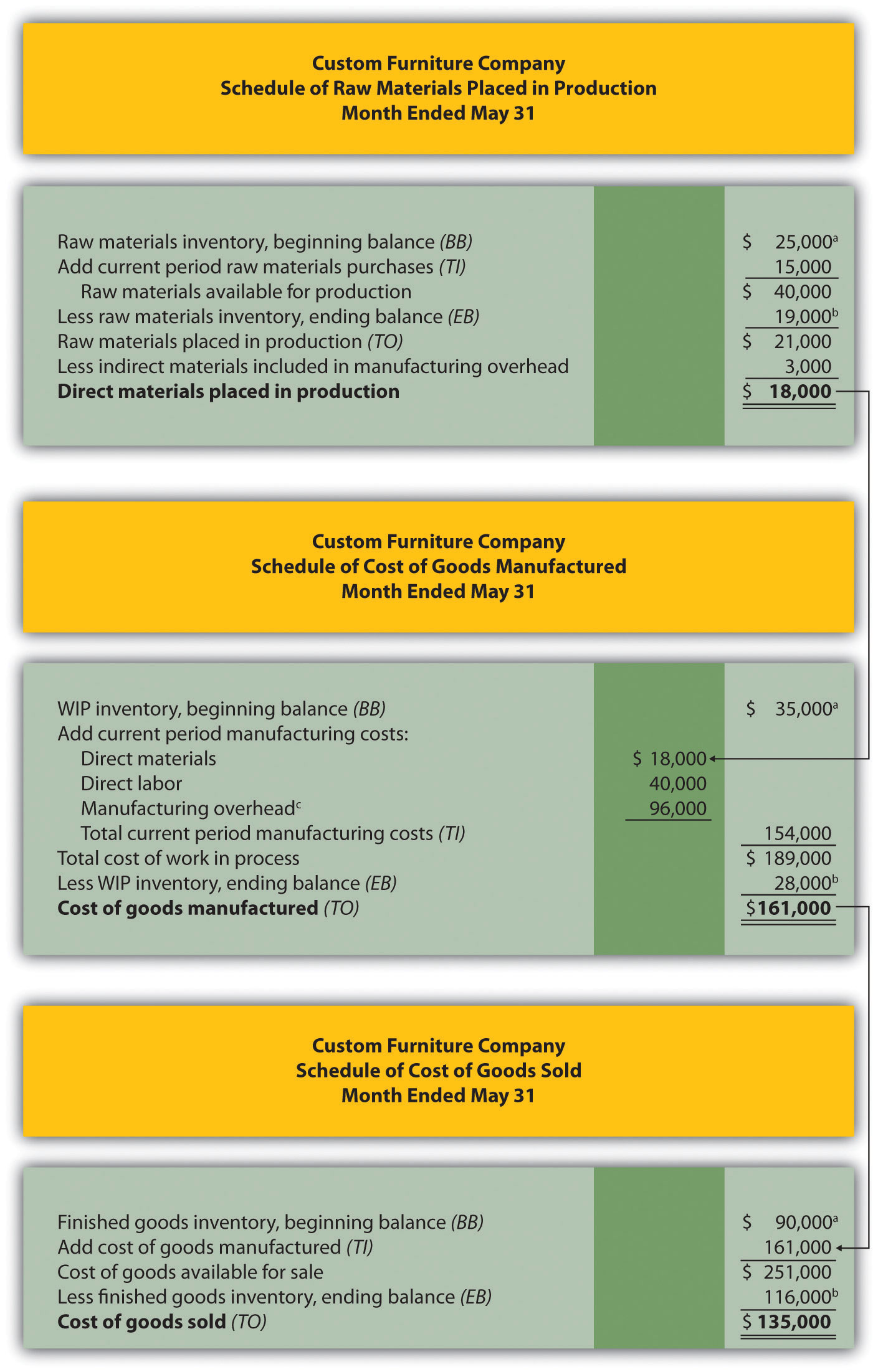
Image source: https://2012books.lardbucket.org/books/accounting-for-managers/section_05/dea30e795607b7d7e753ca05749e84f1.jpg

Accounting In Manufacturing And Trading Concerns

A motor car manufacturer, for instance, buys steel, rubber, aluminium, plastic, etc, that is used to manufacture motor vehicles that are sold to dealers (the trading concern). These dealers, in turn, sell vehicles to the customer.

From an accounting point of view the activities of manufacturing and trading enterprises are very similar, especially their administration, sales and financing activities. Therefore, the accounting principles and most of the procedures can be applied to both manufacturing and trading concerns. The main difference between the two is their method of cost accumulation and cost determination for (1) inventory valuation and (2) the calculation of the cost of goods sold. The difference arises from the fact that trading enterprises buy completed goods, while manufacturers make the goods sold by dealers.

The 'accounting cost of goods manufactured' item in the manufacturing enterprise therefore corresponds to the 'accounting cost of good purchased' item in the trading enterprise. In both cases these amounts represent the cost of finished goods available for sale. The trading enterprise, having purchased its goods in a 'finished' form, experiences little difficulty in determining their cost. The manufacturing enterprise, on the other hand, has to account for the cost of converting the raw materials into finished goods (also know as manufacturing costs).

In converting the raw materials into finished products, the manufacturer makes use of labour, machinery and equipment and also incurs other manufacturing costs such as power consumption, maintenance of machinery, etc. All these costs must be added to the cost of the raw materials to determine the cost of manufactured goods for any period.

Therefore, the accounting records of a manufacturing enterprise must be extended to make provision for recording the various additional costs peculiar to manufacturers.

The three most important elements of manufacturing costs are material, labour and manufacturing overheads. In accounting costing terminology, material and labour costs together are known as primary costs, while the accounting term conversion costs represents the combination of labour and general manufacturing costs.

By virtue of the nature of a manufacturing enterprise's activities, it will require more accounting ledger accounts than a trading enterprise. The ledger must provide for aspects such as machinery and equipment, inventory, raw materials, work-in-progress, finished goods, etc. It is necessary to devote special attention to the various inventory accounts.

At any given time, a manufacturer will have different types of inventory on hand: material inventory ready for use in the manufacturing process; partially completed products still in the process of being manufactured; and finished goods that must be dispatched to dealers. Inventory accounting records and different accounting inventory accounts must be kept in order to determine the costs of each type of inventory at the end of a financial period. All three inventory accounts are asset accounts and are usually kept according to a perpetual accounting inventory system. At the same time they are control accounts supported by the appropriate subsidiary records

Friday, March 30, 2018

Accounting And Reporting Requirements Of Close Corporations

Accounting And Reporting Requirements Of Close Corporations

Image source: http://slideplayer.com/10110915/33/images/28/2.4+Accounting+Standards+p.+33.jpg

Accounting And Reporting Requirements Of Close Corporations

Companies and close corporations (CCs) must keep the following: records showing assets and liabilities; a register of fixed assets; records containing daily entries of all cash received and disbursed; records of all credit purchases or sales and services received or rendered on credit, in sufficient detail to identify the nature of the transactions and the parties concerned; statements of annual stock taking; records enabling the value of stock at the end of the year to be determined and vouchers supporting entries in the accounting records.

A corporation must also keep records of members' contributions, un-drawn profits and revaluations of fixed assets and amounts of loans to and from members, in sufficient detail to identify the nature and purpose of the individual transactions clearly.

These records must be kept in such a manner as to provide adequate precautions against falsification and to facilitate the discovery of any such falsification. A corporation that fails to keep such accounting records and every member who fails to take all reasonable steps to prevent falsification is guilty of an offence. However, if the members entrusted the duty of keeping the accounting records or maintaining a system of internal control to a 'competent and reliable person', this would be sufficient defence.

The financial year of a CC is its annual accounting period. A CC must specify the date of the end of its financial year in its founding statement. As is the case with other information in the founding statement, the date of the end of the financial year may be changed by, registering an amended founding statement.

The members of a corporation must, within a maximum of nine months after the end of every financial year, have financial statements prepared. The financial statements must be approved and signed by or on behalf of every member of the corporation and must consist of an accounting balance sheet and notes thereto and an income statement or any similar financial statement, where such form is appropriate and any notes thereto.

The financial statements must disclose separately the aggregate amounts at the end of the accounting financial year and any changes in these amounts during the year of contributions by members, un-drawn profits, revaluations of fixed assets, amounts of loans to members and amounts of loans from members.

The Close Corporation Act does not require a directors' report or an auditors' report and also does not contain a schedule, which lays down specific requirements for the preparation of annual financial accounting statements. The financial reports of a CC must, in conformity with Generally Accepted Accounting Practice (GAAP) appropriate to the business of the corporation, fairly present the state of affairs of the corporation at the end of the financial year concerned and the result of its operations for the year.

In determining what constitutes generally acceptable accounting policy for the business of a particular corporation, the needs of the members and the primary users of the financial statements should be taken into account.

Over the years accounting practices in the various economic and industrial environments have developed in such a manner as to record and fairly present transactions and occurrences specific to these environments. In deciding what is 'suitable for the business', consideration should also be given to the commercial and management activities of the corporation and the accepted accounting practice in the working environment of the corporation.

Accounting - Net Operating Losses

Accounting - Net Operating Losses

Image source: http://slideplayer.com/5983010/20/images/18/Accounting+for+Net+Operating+Losses.jpg

Accounting - Net Operating Losses

A Net Operating Loss is considered when the total income of a business or profession is less than its expenses or losses. A net operating loss (NOL) can apply to individuals, estates and trusts, if deductions exceed their income from all sources, personal or business-related. However, a business cannot operate at a lost forever. Normally, a business is expected to realize a profit within three to five years. These entities are expected to keep its accounting records accurate and in order, so that required information is readily available. The information will reveal the overall financial condition of the owner and the business.

Accounting for a Net Operating Loss of your business is outlined in income tax laws, which require each owner of a business to report the details of the business operation as part of the owner's personal income tax return. A net operating loss is normally carried back over the two preceding years to offset taxable income. This process requires an amended return for the years involved. If the carry-back does not use up the loss, it can be carried forward until the remainder is used up. In 2001 and 2002, Congress extended the carry back period from two years to five years. If you incurred a net operating loss during those two years and did not specify a carry-back period, you were bound by the five-year rule. The NOL was only extended for those two years and reverted back to the original law in 2003.

The normal process of claiming a NOL is to carry it back two tax years before the NOL year and deduct it from income you had in those years. You can choose skip carry back process of an NOL and only carry it forward. However, there are rules in the details for figuring the NOL in each tax year and how much is carried to the next tax year. Contact the IRS for information on these rules. Unless you choose to waive the carry-back period, you must first carry the entire NOL to the earliest carry-back year. If the NOL is not used up, you can carry the rest to the next earliest carry-back year. Any remaining amount after two carry-back periods must be carried forward until it is used up.

Although a net operating loss can result in a prompt refund or a tentative adjustment for that tax year, accounting practitioners must be well versed on the new laws in order to avoid common errors. Practitioners can avoid these errors by making sure all rules are followed accurately and timely. What seem to be a small deviation from the rules, such as not using the proper claim form and processing in the time allowed or not including all supporting documents with the tax return, could cause the claim to be delayed or even denied. If the tax return has been audited, a copy of the examination must be included. Any claims not filed within the one-year period will be treated as an amended return. A separate form is required with each claim. Missing and inaccurate records can pose a problem for your accounting agent and for completing your claim.

The accounting practitioner must also look for other factors or changes that will affect your entire tax return, such as a change in filing or marital status. When such changes occur, a complete analysis of each spouse's total and taxable income, calculations, deductions, exemptions, etc must be provided. This information must be considered when figuring the NOL carry-backs and carry-overs for married people whose filing status changes for any tax year.

Incorrect calculations and figures are common errors that will delay your claim. Make sure your figures are correct and based on the figures from the original filed return. If there have been any adjustments to the original tax return amounts, use personal records or order an IRS transcript of the tax account. The IRS uses a different table for each year. The correct able must be used to calculate each carry-back year.

In accounting for an alternative tax net operating loss, the IRS requires a Form 6251 to determine the total adjustments for the ATNOL deductions. If the form is missing, a new form must be created from other tax records. If there are incorrect ATNOL calculations, figures must include all non-business and business capital gains and losses when correcting the problem. Charitable contributions are not affected by a NOL carry back. Only carry-forward losses will affect the adjusted gross income for permissible contributions.

When combining multiple years' NOL carry-backs on the same form, a breakdown of how each NOL changed must be shown separately, starting with the earliest one to determine your NOL deduction. A copy of each separate computation sheet must accompany the return. Net Operating Losses have different processing dates and statutory requirements than regular tax changes. Therefore, non-NOL adjustments must be process separately.

Farming business is a trade or business where participation is required in cultivating the land, raising or harvesting crops of an agricultural or horticultural nature, operating a nursery, raising or harvesting fruits or nuts, other crops or ornamental trees. The raising and management of animals is also considered a farming business. However, any contract harvesting of crops grown or raised by someone else, or a business that merely buy or sell plants or animals grown or raised by someone else is not considered a farming business. Certain timber losses may qualified as a farming business if any part of the property meet certain guidelines and the income and deductions fall within the required date guidelines.

You most likely to qualify for a net operating loss (NOL if your deductible loss from operating your farm is more than all of your other income for the year. A property loss due to the destruction of farming equipment or animals by a natural disaster or theft of property, whether personal or business-related, could qualify as a casualty loss, if the loss is more than your income.

Records must be kept for any tax year that generates an NOL for three years after you have used the carry-back/carry-forward or three years after the carry-forward expires.

About Finance or funding for Bed and Breakfast

About Finance or funding for Bed and Breakfast

Image source: http://www.daltonsbusiness.com/uploads/images/383301_383400/383329_8ef627ca0b48b2ee/charming-4-star-b-amp-b-guest-house-near-paignton-seafront_1000X750.jpg

About Finance or funding for Bed and Breakfast

Bed and Breakfast achieved tremendous success as an alternative of traditional hotel or motel. Many people now a day is quitting their jobs and plan to start their own bed and breakfast accommodation in their own property. Generally bed and breakfasts are handled by couples and mostly they own the property. Every Bed and breakfast is different from each other and may vary in services and interior as well.

Many times it happens that potential buyers of bed and breakfast or someone who wish to start their dream bed and breakfast business may need financial help or need loans to fulfill their dreams. There are many options now a day which can help you buy your dream bed and breakfast property. In this article we will see some of the options available to get financial help from as well as we will discuss about funding as well.

Guidelines to get financial help from sources!

When you plan to think about taking loans for bed and breakfast you need to contact someone who has experience in bed and breakfast, you should discuss your issues with them and let them suggest few ideas first. This is initial and basic thing that anyone can do.

First step is to make plan of your bed and breakfast and lets some professional person to give advice on it and just get rough idea about budget and all.

You can approach to standard banks for loans on your bed and breakfast, but you will have to show them your business plan and certificates that your land qualifies some specific standards. If you have sufficient documents you will easily get loans for your bed and breakfast.

Commercial lenders may be quite suitable approach for getting financial help for bed and breakfast as they have data of bed and breakfast as well as they have idea about pricing of any bed and breakfast. So it is great option to go for commercial lenders, if you know someone personally.

Other private finance companies can be option to go for financial help. There are many private firms which help to get bed and breakfast mortgages or loans at an effective interest rate. Private financial companies will require total details of buyers as well, they will verify the financial situation of buyer as well they have set certain rules and criteria for financing bed and breakfast, if buyers meet those criteria than finance will be no more issue for them.

These are some of the ways from where you can get finance for your bed and breakfast.

There are many ways to raise funds for your dream project of bed and breakfast. As it is not always that you will get it easily so one may need to do decide budget of the bed and breakfast, try to get government grant as you wont need to think about paying back them etc.

These are certain ways you can raise funds for your bed and breakfast as well. You can do a lot to get funds for your bed and breakfast and it will be worth it if you get expected business so it is necessary that you are also financial capable to face any economical crisis after starting bed and breakfast of your dream as it is not that you will get customers at the first shot, you may have to wait for some time to get your bed and breakfast noticed by others and till that time you have to pay all expenses from your pocket itself without any income.

Copyright 2012

Advantages and Disadvantages of Printable Grocery Coupons

Image source: http://www.home-storage-solutions-101.com/image-files/450x583xgrocery-price-book-printable-2.jpg.pagespeed.ic.YZGKLGe-OL.jpg A...